E-LINKESADE BUSINESS SCHOOLE-LINKESADE BUSINESS SCHOOLE-LINKESADE BUSINESS SCHOOLE-LINKESADE BUSINESS SCHOOLE-LINKESADE BUSINESS SCHOOLE-LINKESADE BUSINESS SCHOOLE-LINKESADE BUSINESS SCHOOLE-LINKESADE BUSINESS SCHOOLE-LINKESADE BUSINESS SCHOOLE-LINKESADE BUSINESS SCHOOLE-LINKESADE BUSINESS SCHOOLE-LINKESADE BUSINESS SCHOOL
E-LINKESADE BUSINESS SCHOOLE-LINKESADE BUSINESS SCHOOLE-LINKESADE BUSINESS SCHOOLE-LINKESADE BUSINESS SCHOOLE-LINKESADE BUSINESS SCHOOLE-LINKESADE BUSINESS SCHOOLE-LINKESADE BUSINESS SCHOOLE-LINKESADE BUSINESS SCHOOLE-LINKESADE BUSINESS SCHOOLE-LINKESADE BUSINESS SCHOOLE-LINKESADE BUSINESS SCHOOLE-LINKESADE BUSINESS SCHOOL
E-LINKESADE BUSINESS SCHOOLE-LINKESADE BUSINESS SCHOOLE-LINKESADE BUSINESS SCHOOLE-LINKESADE BUSINESS SCHOOLE-LINKESADE BUSINESS SCHOOLE-LINKESADE BUSINESS SCHOOLE-LINKESADE BUSINESS SCHOOLE-LINKESADE BUSINESS SCHOOLE-LINKESADE BUSINESS SCHOOLE-LINKESADE BUSINESS SCHOOLE-LINKESADE BUSINESS SCHOOLE-LINKESADE BUSINESS SCHOOL
E-LINK
Context
What is E-LINK?
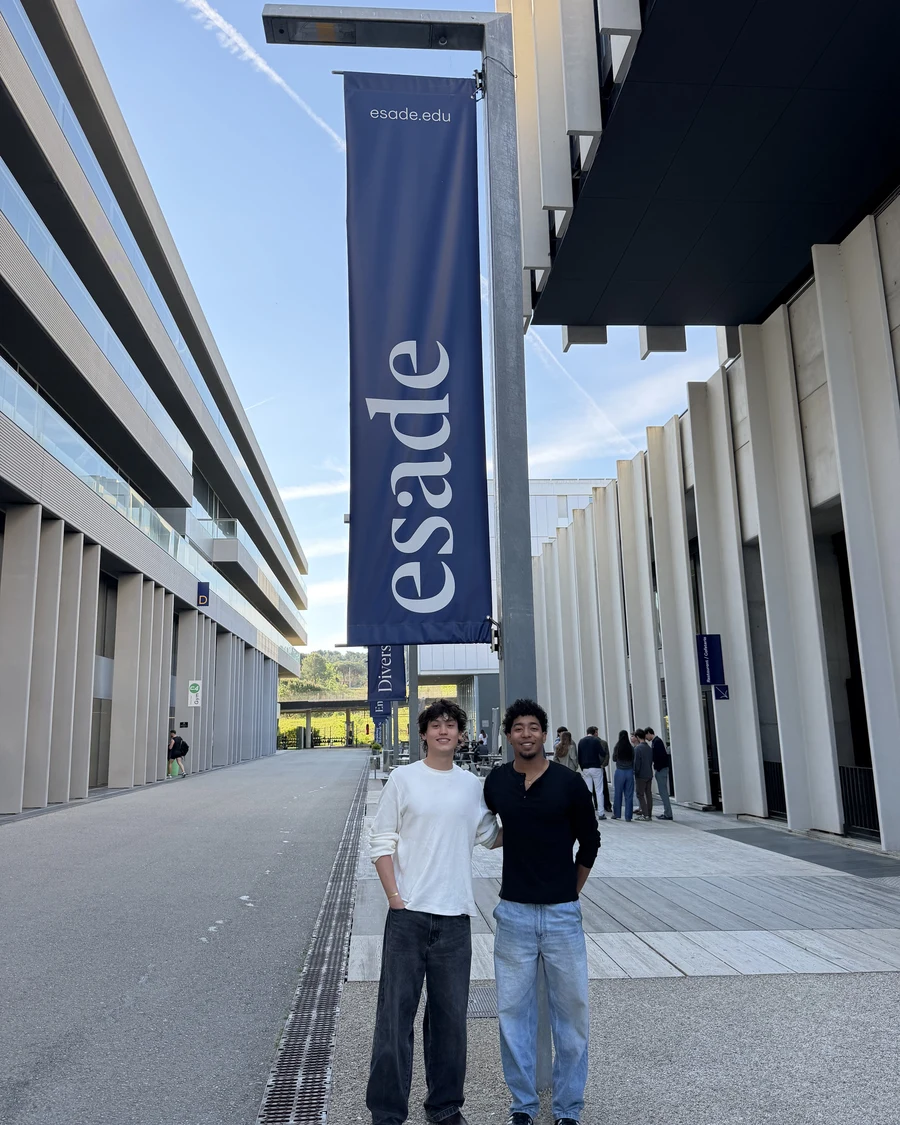
E-LINK is a business case and project-management plan I built at Esade Business School in Barcelona with a team of classmates — Ira von Below, Héloïse Vieillescazes, Emily Acosta, and, on the earlier business-case draft, Noah Chang. It started as a business-case assignment and grew into a full project-management deliverable: a stakeholder analysis, a work-breakdown structure, a Gantt-scheduled rollout, and a risk register, on top of the original pitch. My focus was the project-management side — scoping the work, building the schedule, and stress-testing the plan against the people who’d actually have to run it — the part that turns a good idea into a plan a school could use.
Timeline
Feb – May 2026
Role
Project ManagerBusiness Analyst
Team
5, Esade Business School
Tools
Figma MakeClaudeMicrosoft Office
Skills
Business Case DevelopmentStakeholder AnalysisProject PlanningRisk ManagementWork Breakdown Structure
The idea: an online platform connecting Esade students, alumni, and recruiters to close the gap between Esade’s internship landing rate and its peer schools’. We proposed E-LINK: a tiered mentorship and knowledge-exchange network with one target — raise the interview landing rate by 20% — built on four pillars.
Esade’s third-year students were landing interviews into summer internships at a 35% rate, while direct competitors climbed to 45–53% over the same seven years.
Project Location
Barcelona, Spain
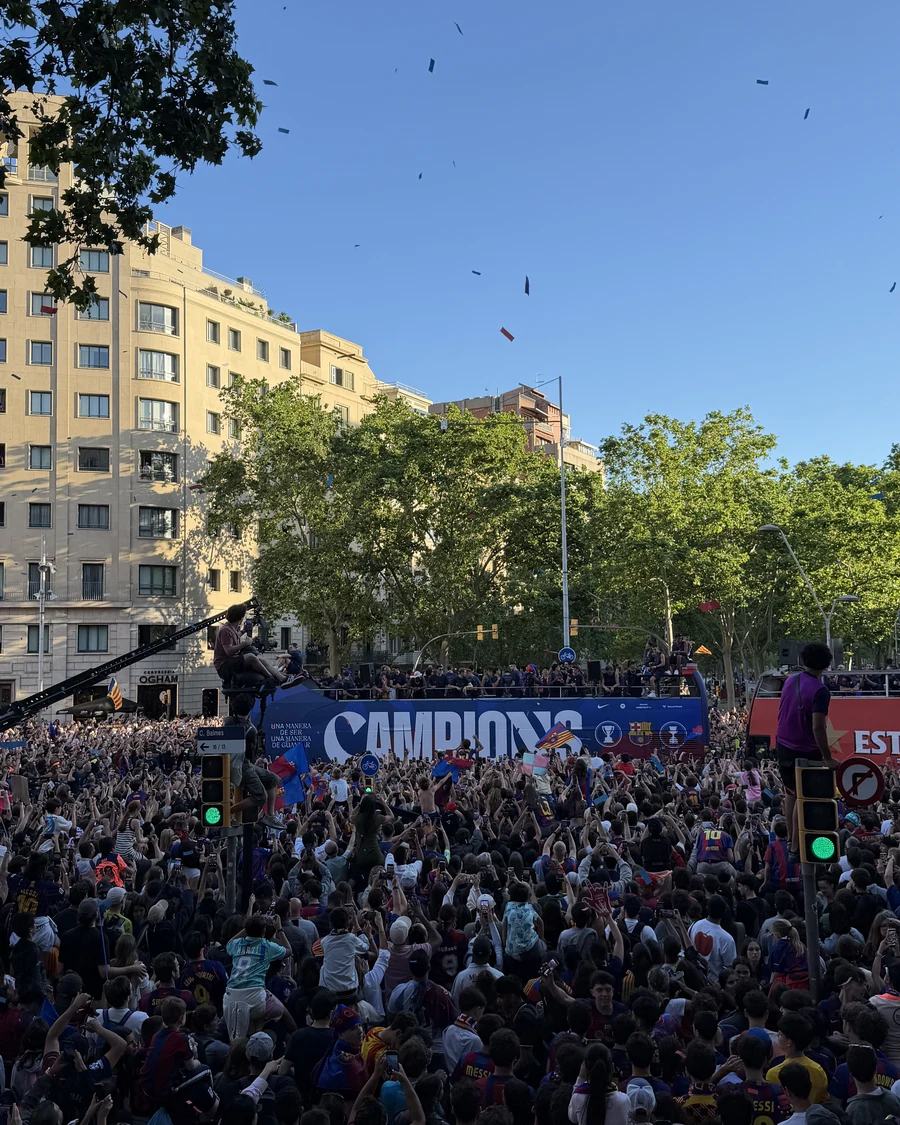
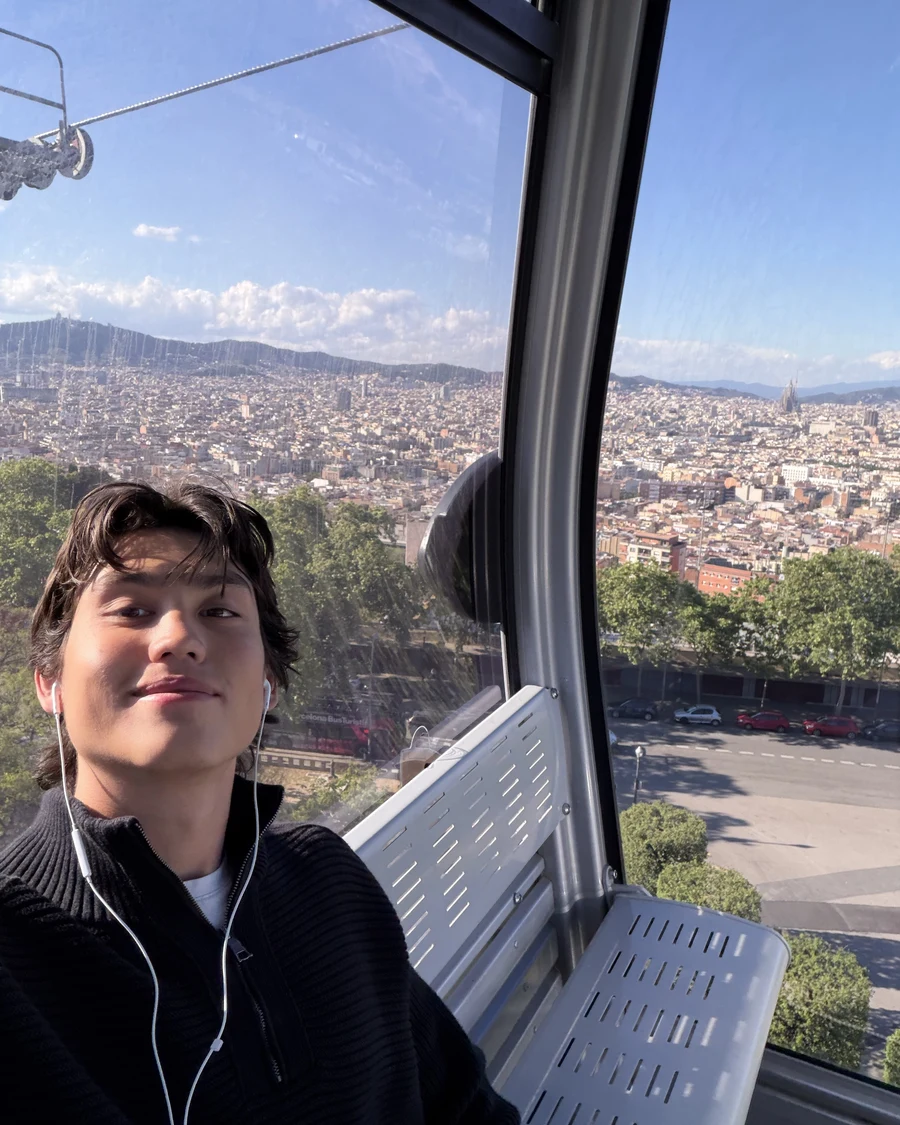
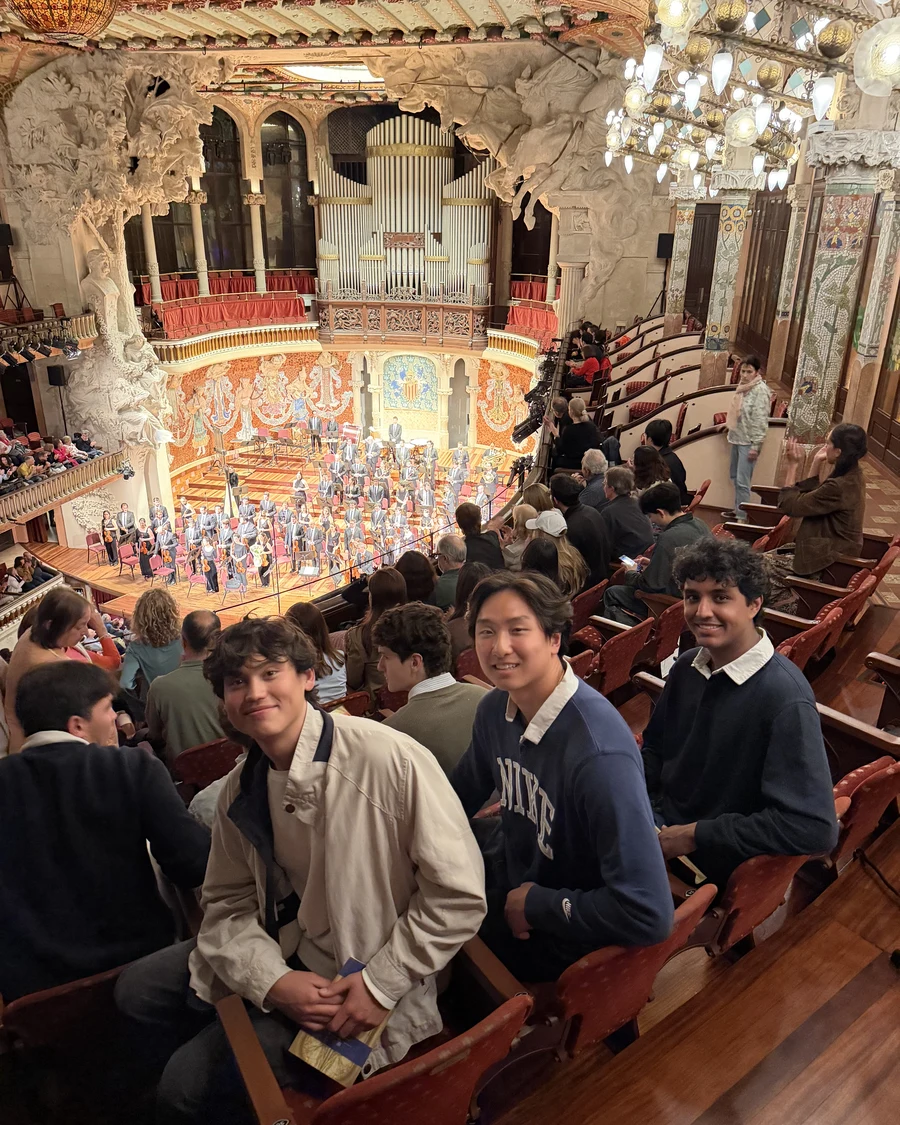
A Few Photos Along the Way
BeforeAfter↔
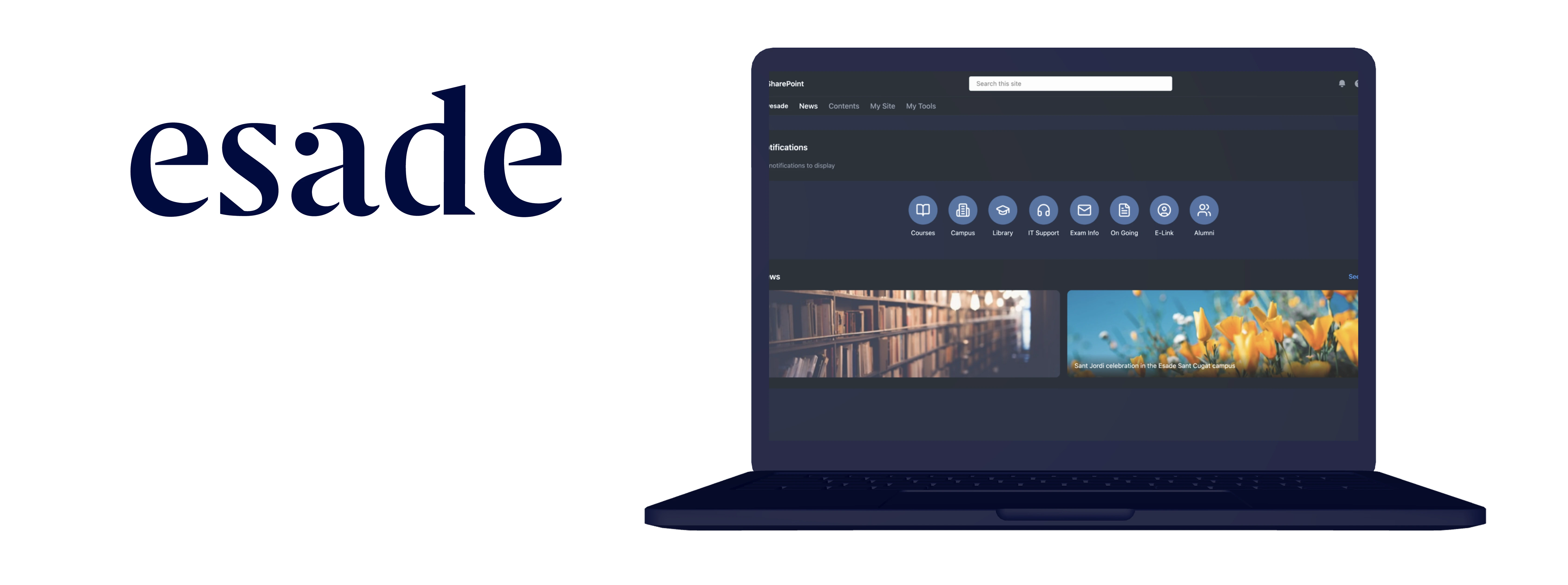
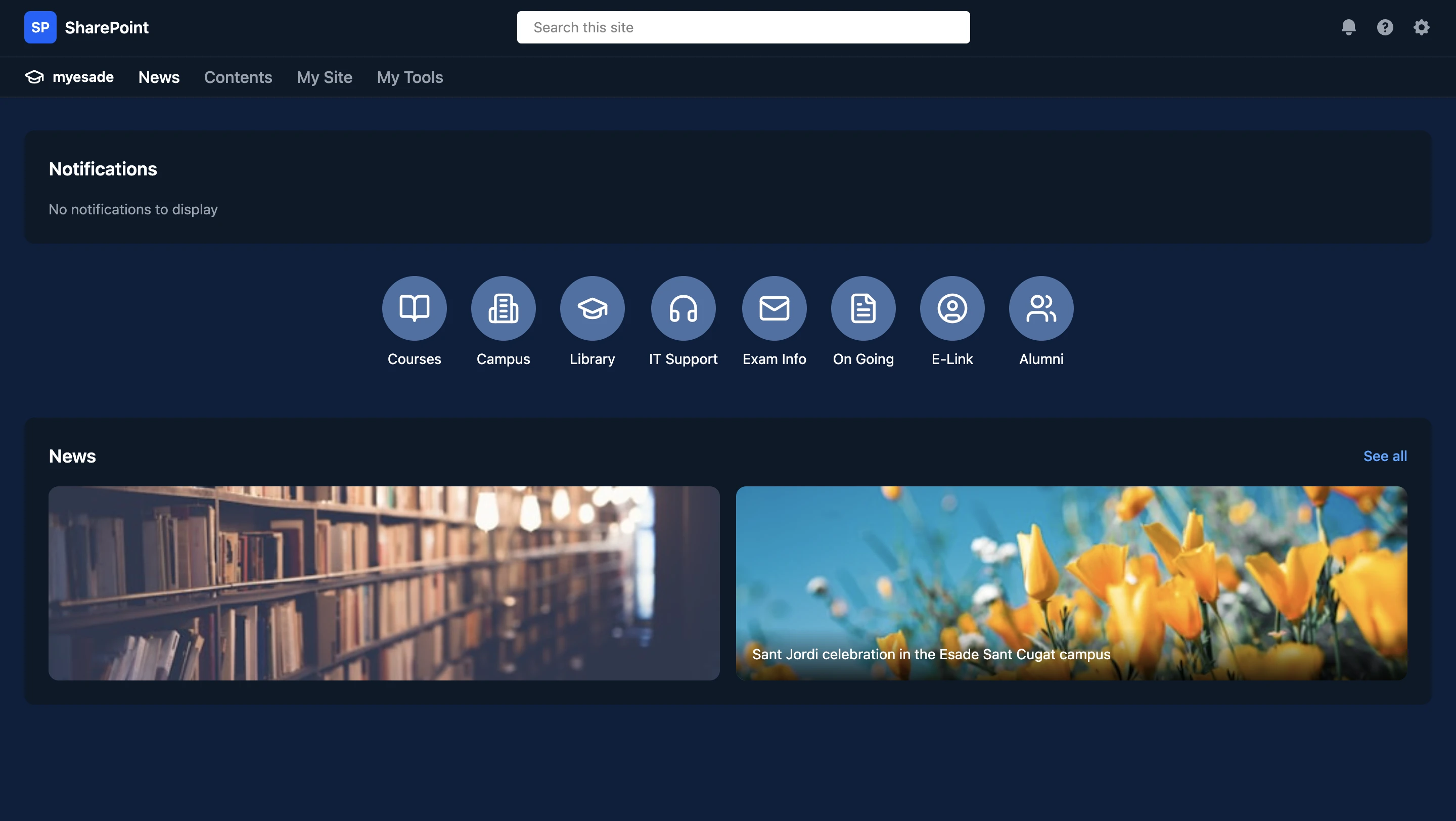
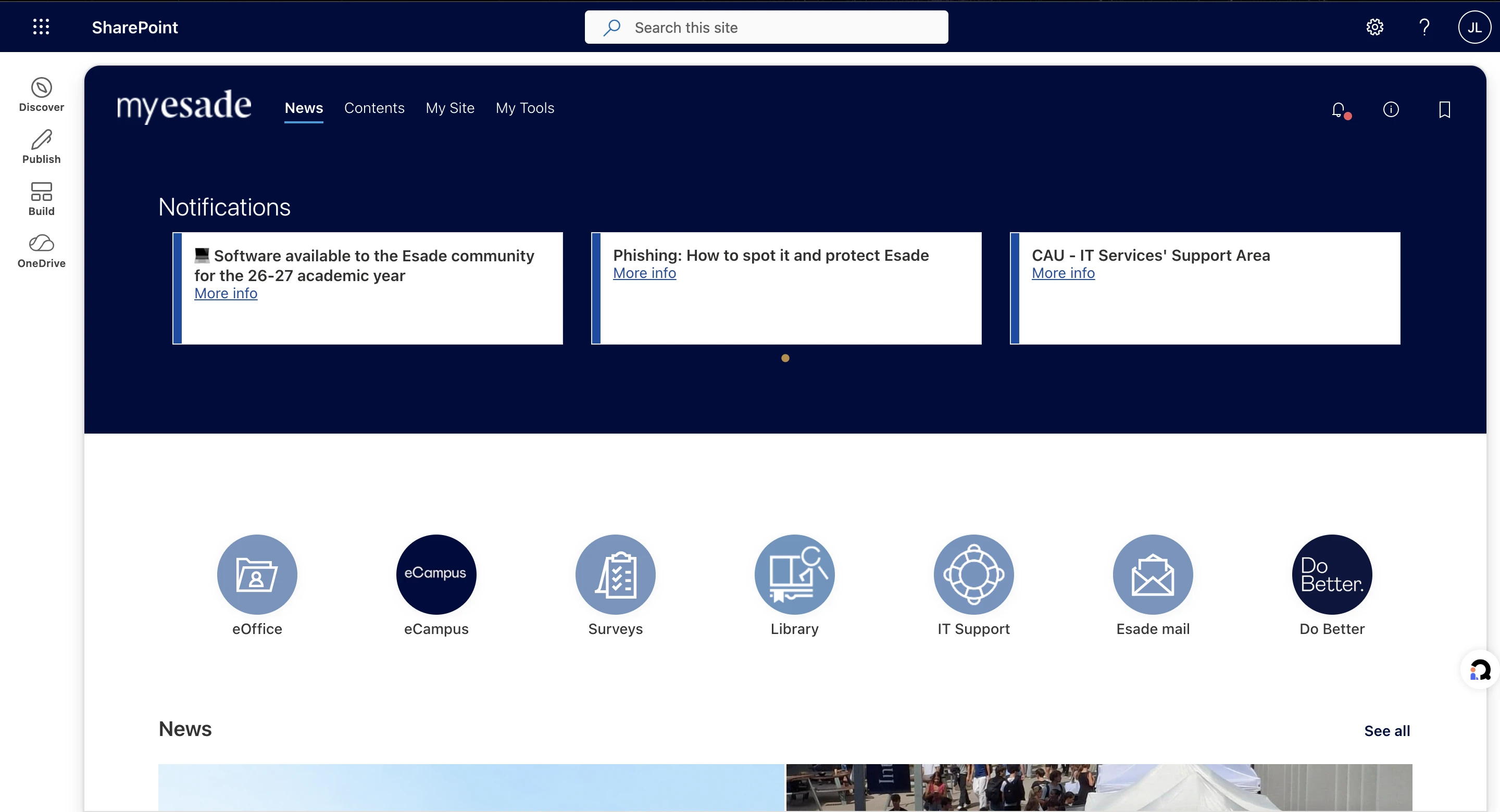
Esade’s myesade intranet homepage — the original is on the left. Drag to reveal the redesign, with E-Link added as its own shortcut.
35% vs. 45–53%
The Problem
We proposed E-LINK: a tiered mentorship and knowledge-exchange network built on four pillars, in response to three specific problems.
01
Information gap — students had no structured way to learn what alumni actually did after graduating, or what a given employer’s interview process looked like.
02
International underdevelopment — Esade’s alumni network is large but scattered; there was no single place pulling it together for the specific job of interview prep.
03
Reputational risk — a landing rate that keeps losing ground to direct competitors affects the school’s pitch to prospective students and recruiters alike.
Evolution of internship landing rates over the last 7 years
ESADE
IE Business School
Bocconi
Challenge 01
Information Gap
Information gap — students had no structured way to learn what alumni actually did after graduating, or what a given employer’s interview process looked like.
How It Was Solved
Centralized Resources
A student-governed repository of interview transcripts, technical test prep, and company-specific "culture codes."
Matching Buddies
Pairing students preparing for the same interviews to study together.
The alumni database — filterable by career field and location — is the matching-buddies pillar and the information-gap problem solved in one screen: a student can find someone a few years ahead in the exact role they’re prepping for, instead of cold-emailing whoever answers first and waiting for a response soon.
Challenge 02
International Underdevelopment
International underdevelopment — Esade’s alumni network is large but scattered; there was no single place pulling it together for the specific job of interview prep.
How It Was Solved
Mentorships
Structured "coffee chat" and mock-interview scheduling, so networking has a format instead of being cold outreach.
Mentorship is the structured version of a coffee chat: a mentor’s specialty and prep documents are visible before a student reaches out, and one-on-one workshop slots are booked directly instead of over email back-and-forth — so the first conversation can start with real preparation and a clear purpose on both sides.
Group chats sort by industry rather than class year, so a third-year deciding between consulting and tech can sit in both conversations instead of picking one identity to network under — pulling the scattered alumni network into one organized place, so students spend less time searching and more time preparing.
Challenge 03
Reputational Risk
Reputational risk — a landing rate that keeps losing ground to direct competitors affects the school’s pitch to prospective students and recruiters alike.
How It Was Solved
Fast Track
A referral system letting alumni in leadership positions flag high-potential candidates directly.
Recruiter dinners make the incentive from the stakeholder analysis real — a firm-hosted dinner with a capped headcount and a visible "spots remaining" counter, giving recruiters a direct reason to stay engaged with the school instead of drifting to competitors — a simple, visible reason to keep showing up each time.
Behind the Prototype
The Code, Page by Page
Each page of the prototype next to the React component behind it. Pick a page to watch it run and read its code. E-LINK was a proposal, not a shipped product, so the people and companies in the prototype are sample data. Nothing shown here is real alumni or recruiter information, and no real personal data is used.
The riskiest assumption in the plan wasn’t the platform — it was whether the people who’d need to actually use it would. We mapped students, alumni, recruiters, and Career Services (whose workload we’d be adding to) against what each group stood to gain and what we’d be asking of them in return.
Students
Primary Beneficiaries of E-Link
Would gain access to alumni network & employers, structured and precise interview formation.
Main gain: higher internship success rate.
Alumni Mentors & Esade Alumni Network
Would gain access to pre-selected candidates and recognition within Esade.
Increased alumni engagement strengthening bonds and recognition of the network.
Employers (external)
Access to well prepared candidates while reducing companies’ screening costs.
Opportunity of strengthening their company’s attractivity to qualified candidates.
Career Services & Esade
Stronger employer relationships, precise data insight on students aspiration.
Improved school reputation through higher internship landing rate for students.
4 Key Success Factors
Clear alignment with Career Services
Clear model of formation and commitment for Alumni mentors
Quality control of student preparation
Strong engagement incentives for all stakeholders
The two hardest groups to win over were students — likely to skip sessions without a reason to show up — and Career Services, who’d carry most of the added event workload. For students, that meant pairing every session with a real incentive (dinners, drinks) and leading with proof the program worked. For Career Services, it meant offering logistical support and ready-to-use templates so E-LINK reduced their workload rather than adding to it — a fair trade for their time.
Project Plan
We broke the work into a five-phase work-breakdown structure — from problem definition through pilot testing to expansion and closure — then scheduled it against a 12-week window from late February to mid-May, with milestones for informing students, running a 48-hour pilot test, going live, and comparing results against baseline. Each phase closes with a clear checkpoint, so progress stays visible from the first week to the last, and everyone can see what comes next.
Timeline — Feb 23, 2026 – May 11, 2026
Inform students & gather sign-upsMarch 30, 2026
Execute 48h pilot test cycleApril 27, 2026
Go-Live: Launch core platformMay 1, 2026
Compare results vs baselineMay 9, 2026
Formalize project completionMay 11, 2026
Discovery & Problem
Outreach & Network
Design & Prototyping
Testing & Q&A
Launch & Execution
Expansion & Closure
Work-Breakdown Structure
Phase 1
Project Foundation
Stakeholder Research
Scope Finalization
Phase 2
Interface & Experience
Resource Architecture
Networking Features
Phase 3
Pilot Readiness
Testing & Refinement
Validation
Phase 4
Core System Deployment
Engagement Initiatives
Strategic Partnerships
Phase 5
Scale-Up Operations
Performance Auditing
Project Closing
Gantt — Phase Schedule
Discovery & Problem
Feb 24 – Mar 15
Outreach & Network
Mar 9 – Apr 13
Design & Prototyping
Apr 13 – Apr 20
Testing & QA
Apr 20 – Apr 28
Launch & Execution
Apr 27 – May 2
Expansion & Closure
May 1 – May 11
CompletedIn ProgressNot Started
Risk Management
Before pitching the plan, we ran it through a risk register — three external risks (student engagement, recruiter buy-in, alumni fatigue) and four internal ones (platform failures, data privacy, misalignment with Career Services, and low-quality prep material), each graded on probability and impact with a specific mitigation. Doing this before pitching meant the plan’s weakest points were named and answered up front, not after, so the pitch could speak to them head on.
Code
Risk
Probability
Impact
Grade
Mitigation
EXT-1
Low Student Engagement
Students are "lazy" or disinterested in attending sessions.
High
High
A
Incentivize attendance with social events (dinners/drinks).
Showcase success statistics early to prove value.
EXT-2
Recruiter Non-Participation
Employers do not see the value in the platform.
Medium
High
A
Highlight reduced screening costs and access to "well-prepared" candidates.
Create a sense of competition/urgency among firms.
EXT-3
Alumni Fatigue
Mentors feel overwhelmed by student requests or lack of structure.
Medium
Medium
B
Implement structured "Coffee Chat" modules and clear templates to reduce workload.
Guarantee recognition or stipends for their help.
INT-1
Technical Platform Failure
The "Study Buddy" or matching algorithm fails.
Low
High
A
Conduct a rigorous 48-hour pilot testing phase before core launch.
Perform rapid technical iterations based on error reports.
INT-2
Data Privacy Breach
Leak of private alumni contact info (personally identifiable information) or student interview transcripts.
Low
Critical
A
Restrict access to "Esade-private" network only.
Implement strict quality control and student-governed repository rules.
INT-3
Misalignment with Career Services
Project duplicates work or creates extra burden for school staff.
Medium
High
A
Offer logistical support and co-organization for all joint events.
Ensure complete transparency on data, objectives, and results.
INT-4
Poor Quality of Prep Material
Students share inaccurate "culture codes" or transcripts.
Medium
Medium
B
Establish a quality control protocol for all uploaded resources.
Assign leadership roles to Student Club reps for moderation.
The two "A"-grade risks that shaped the plan most: low student engagement (high probability, high impact) is why every milestone pairs a session with a social incentive, and data privacy (low probability, critical impact) is why the repository was scoped as Esade-private with student-governed access controls rather than open to anyone with a link. Both choices came straight out of the risk register, and both are visible in the final plan, so the reasoning is easy to trace.
Success Metrics & Goals
+20%
Interview landing rate
The core KPI — a two-year outcome, measured by comparing post-launch results against the pre-E-LINK baseline of about 35%.
Adoption roadmap
By Mar 2027Engage 60–80 students
By Jun 2027Activate 10–15 alumni mentors
Mar–Oct 2027Host 3 recruiter dinners
By Jan 2028Centralize 30–40 prep resources
By Jun 2028Grow to 30 alumni mentors
By Jan 2029Grow to 140–200 students
Growth targets
Students engaged
By Mar 202760–80
By Jan 2029140–200
Alumni mentors
By Jun 202710–15
By Jun 202830
Recruiter dinners
3
Between March and October 2027
Prep resources centralized
30–40
By January 2028
Leading indicators
Participants
Daily connections
Students who contacted an alumnus
We tracked platform engagement directly as a leading indicator that would show up well before two years of interview data could.
Reflection
This was a proposal, not a shipped product — the value was in building a plan disciplined enough that Esade’s Career Services could pick it up and run with it. Working through the stakeholder analysis was the most useful part: it’s easy to design a platform that’s good for students and forget it also has to be good for the Career Services staff running events and the alumni giving up their time, and the mitigation strategies changed real scope decisions (like putting the resource repository under student governance instead of open access) — a reminder that the analysis was worth doing early and doing thoroughly, not as an afterthought.
The next step would be validating the riskiest assumption directly — a small pilot with actual Career Services buy-in — rather than only stress-testing it on paper through the stakeholder and risk analysis, and learning directly from what real students and staff say and do, so the next version of the plan rests on evidence.


 BeforeAfter